
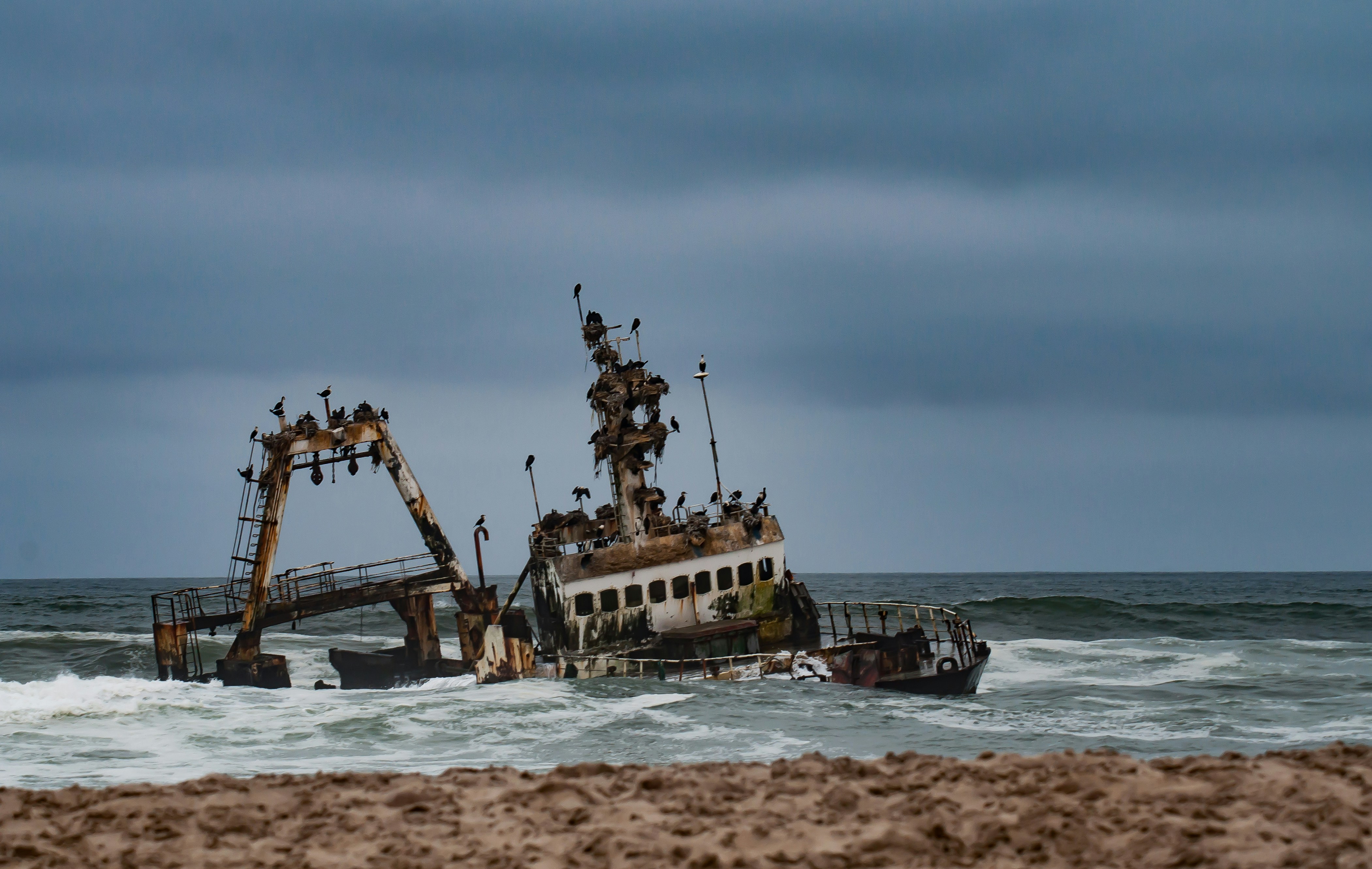
The Skeleton Coast Namibia is where the world’s oldest desert runs straight into the cold Atlantic Ocean. There is nowhere else on the continent like it. Dense fog rolls in from the sea before sunrise, wrapping shipwrecks in silence. Dunes the colour of rust push to the water’s edge and disappear beneath the surf. The Benguela Current — flowing north from Antarctica — keeps the air cool and the sea rough. It made this one of the most dangerous stretches of ocean ever sailed.
The San people called it “The Land God Made in Anger.” Portuguese sailors named it “The Gates of Hell.” Today, Skeleton Coast National Park draws travelers who want something genuinely wild — and for those who find it, it tends to stay with them.
Why So Many Ships Wrecked Here
The Skeleton Coast earned its name honestly. Over 1,000 ships lie wrecked along this 500-kilometre stretch of Namibian coastline. The Benguela Current runs fast and cold. Coastal fog reduces visibility to near zero. Sandbars shift without warning. Sailors who made it ashore found themselves in one of the most inhospitable places on earth — the Namib Desert at their backs, the Atlantic in front, and no fresh water for hundreds of kilometres in either direction.
The wrecks are still there. The Eduard Bohlen lies half-buried in sand 500 metres from the current waterline — the sea has retreated around it since it ran aground in 1909. The Zeila, a fishing trawler, sits on the beach with surf breaking against its rusting hull. In thick morning fog, they look like something from another era entirely.
What Lives Here
For all its reputation for desolation, the Skeleton Coast is alive. The same fog that wrecked ships feeds a remarkable ecosystem. Desert beetles collect moisture directly from the air. Ancient Welwitschia plants — some over a thousand years old — survive on fog alone in landscapes that receive less than 15mm of rainfall per year.
Cape fur seals gather in colonies of tens of thousands at Cape Cross, drawing lions from the inland desert to hunt along the shoreline — one of the only places in the world where lions hunt seals on a beach. Desert-adapted elephants move through dry riverbeds between the mountains and the coast, covering enormous distances to find water. Brown hyenas, oryx, and desert lions survive here in ways that seem to contradict everything the landscape suggests about possibility.
And the birds. The cold, nutrient-rich water of the Benguela Current supports vast numbers of seabirds — Cape gannets, flamingos, African penguins, and cormorants in numbers that stagger.
The Two Skeleton Coasts
Visitors often don’t realise the Skeleton Coast divides into two very different experiences.
The southern section — from the Ugab River down toward Swakopmund — is accessible by road and rewards a day or two from a base in Swakopmund. Shipwreck visits, Cape Cross seal colony, dramatic coastal scenery. It’s accessible and atmospheric.
The northern section — inside Skeleton Coast National Park — is something else entirely. Permit-only, fly-in only, stretching toward the Kunene River at the Angolan border. This is where the Kaokoveld wilderness meets the Atlantic. Luxury desert camps here are among the most remote destinations on the continent. Small, exceptional, and booked months in advance. A Skeleton Coast safari in the north means shipwreck flights, desert elephant tracking along dry riverbeds, and walking through salt pans and canyon landscapes that look like nothing on earth. It is a genuine conservation area — access is strictly controlled to protect desert-adapted wildlife and keep the wilderness intact.
When to Go
The Skeleton Coast works year-round, but each season offers something different.
May to October brings Namibia’s dry winter — wildlife is most active, desert elephants move predictably along riverbeds, and the fog is at its thickest and most atmospheric. This is peak season for the fly-in camps.
November to March is hotter and occasionally brings rain to the interior. The landscape greens briefly. Fewer visitors, more solitude, and a different quality of light.
The fog itself — the defining feature of this coastline — sits heaviest in the mornings almost every month of the year. The wrecks, the dunes, the seals: all of it looks different through fog than it does in sunlight. Most experienced visitors say the fog is not the inconvenience it appears to be on the itinerary. It is the whole point.
How the Skeleton Coast Fits Into a Namibia Safari
Most guests visit as part of a wider Namibia safari. They fly in from Windhoek or Swakopmund, spend two or three nights at a remote desert camp on the coast, then continue to Etosha National Park, Damaraland, or Sossusvlei. The contrast between coast and inland desert is extraordinary. It makes both feel more vivid.
For a luxury fly-in safari to the northern Skeleton Coast, three nights is the minimum worth doing. Four gives you time to go deeper.
Thinking about adding the Skeleton Coast to your Namibia itinerary? Get in touch with our travel consultants — we’ll help you plan a trip that does it properly.